
Introduction
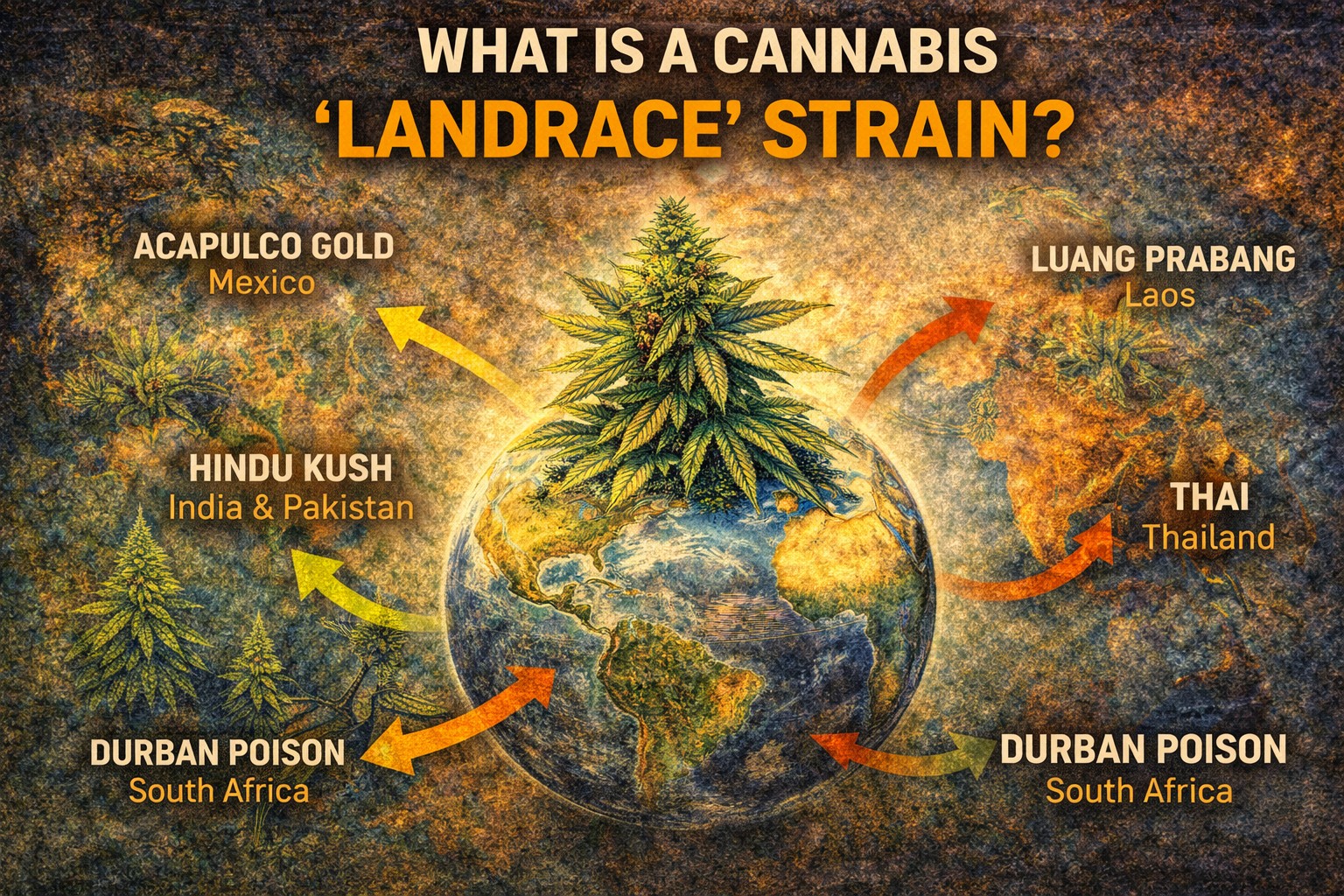
Landrace strains are the original forefathers of all the cannabis that we smoke today. Long before the crossbreeding frenzy of the 2000’s landrace strains were a lot more prevalent as each geographical location had its own ‘specialized’ cannabis plant that had evolved over time in its given location.
Historical Importance Of Landrace Strains
Historical documents from around the world, some dating as far back as 2900 B.C., tell us cannabis has lived alongside humans for thousands of years, cultivated for religious and medicinal purposes.
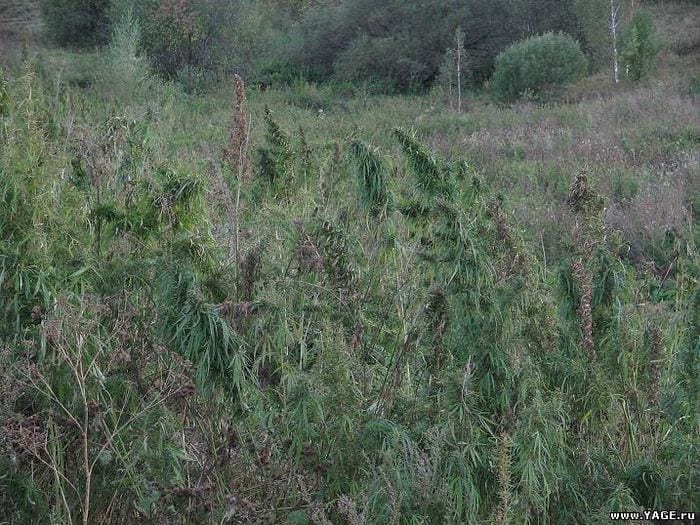
Many growers believe the earliest cannabis strains sprouted in the Hindu Kush region of Afghanistan and Pakistan and eventually spread to other areas, including South America, Asia, Jamaica, Africa, and even Russia. We call these indigenous strains landraces.
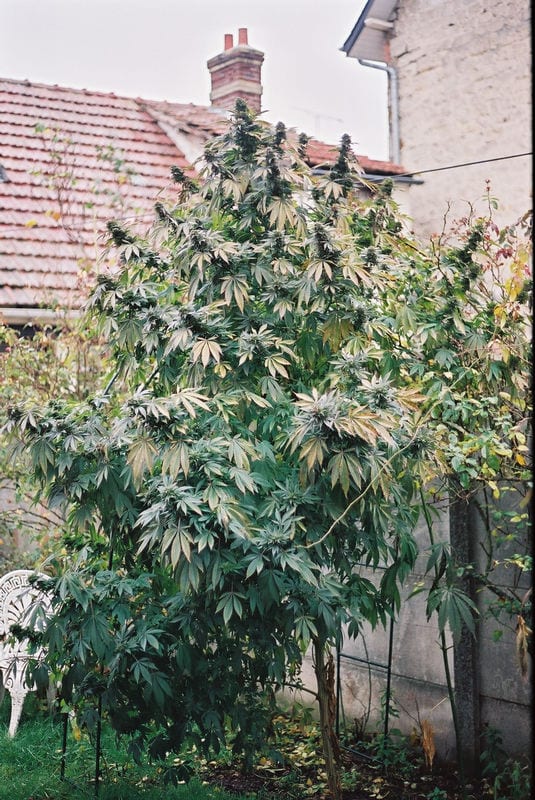
The importance of these strains is no joke and we can see this by the involvement of some of the top cannabis breeders to ensure that the original landrace strains are not lost. Arjan and Franco from Greenhouse Seeds in Amsterdam are two of these people who travel the world locating landrace strains to use in their selective breeding program at Greenhouse Coffeeshop. They have an excellent series of documentaries covering this subject you should watch them here.
Greenhouse Seeds Love Of Landrace Cannabis Strains
“Arjan always considered these landraces very important for the breeding process because they are the bases that have been selected by nature,” Franco told us, “The [span of time] over which nature does this is so huge that they are not replicable by man under any conditions — not indoor, not outdoor, not in any way.”
Franco went on to say that “We have had several pilot projects with universities and hospitals here in the Netherlands where we were able to get real feedback from patients,” Franco said. “From that feedback we figured out that the most important thing is the synergy between cannabinoids. High CBD is very important for some conditions but it will not be as effective or beneficial if you only focus on the CBD itself … When you have a beneficial effect from cannabis, I go as far as to say that it might be just as important this synergy between terpenoids and cannabinoids than between the cannabinoids themselves.”
What Makes a Strain a “True” Landrace?
A lot of people throw the term landrace around without fully understanding what it means. A true landrace strain is cannabis that has evolved naturally in a specific geographic region over many generations, without heavy interference from modern breeders.
These plants adapted to their local environment — climate, altitude, pests, soil, and seasonal light cycles — through natural selection rather than human-designed crossbreeding. Because of this, landrace strains are often genetically stable and display consistent characteristics.
It’s also worth knowing the difference between a few commonly confused terms:
| Term | Meaning |
|---|---|
| Landrace | A native strain that developed naturally in one region |
| Heirloom | A landrace strain that was taken to another region and cultivated there |
| Hybrid | A cross between two or more different strains |
Geographical Distribution of Landrace Strains
Landrace strains are a testament to cannabis’s ability to adapt and thrive in varied environments. In the rugged terrains of the Hindu Kush mountains, for example, the harsh climate has given rise to resilient and potent indica strains. Similarly, the sunny, equatorial regions of Africa are home to energizing and uplifting sativa strains like Durban Poison, known for its sweet aroma and stimulating effects.
Examples of Prominent Landrace Strains
Several landrace strains have gained prominence for their unique characteristics and historical significance. Afghan Kush, a pure indica from Afghanistan, is renowned for its heavy resin production and sedative effects. Thai, a sativa from Thailand, offers a contrasting experience with its sharp, energizing high. These examples highlight the diversity within landrace strains, each offering a distinct taste, aroma, and effect.
🔬 Landrace Strains and Terpene Diversity
Landrace strains are not just important for their cannabinoid profiles — they also offer unique terpene combinations that are sometimes lost in modern hybrid breeding.
Terpenes influence aroma, flavor, and how a strain feels. Many landrace strains have distinct, earthy, spicy, herbal, or floral profiles that differ from the sweet, dessert-like flavors popular today.
This diversity adds to what many growers call the “entourage effect” — the way cannabinoids and terpenes work together to shape the overall experience.
Landrace Genetics vs Modern Hybrids
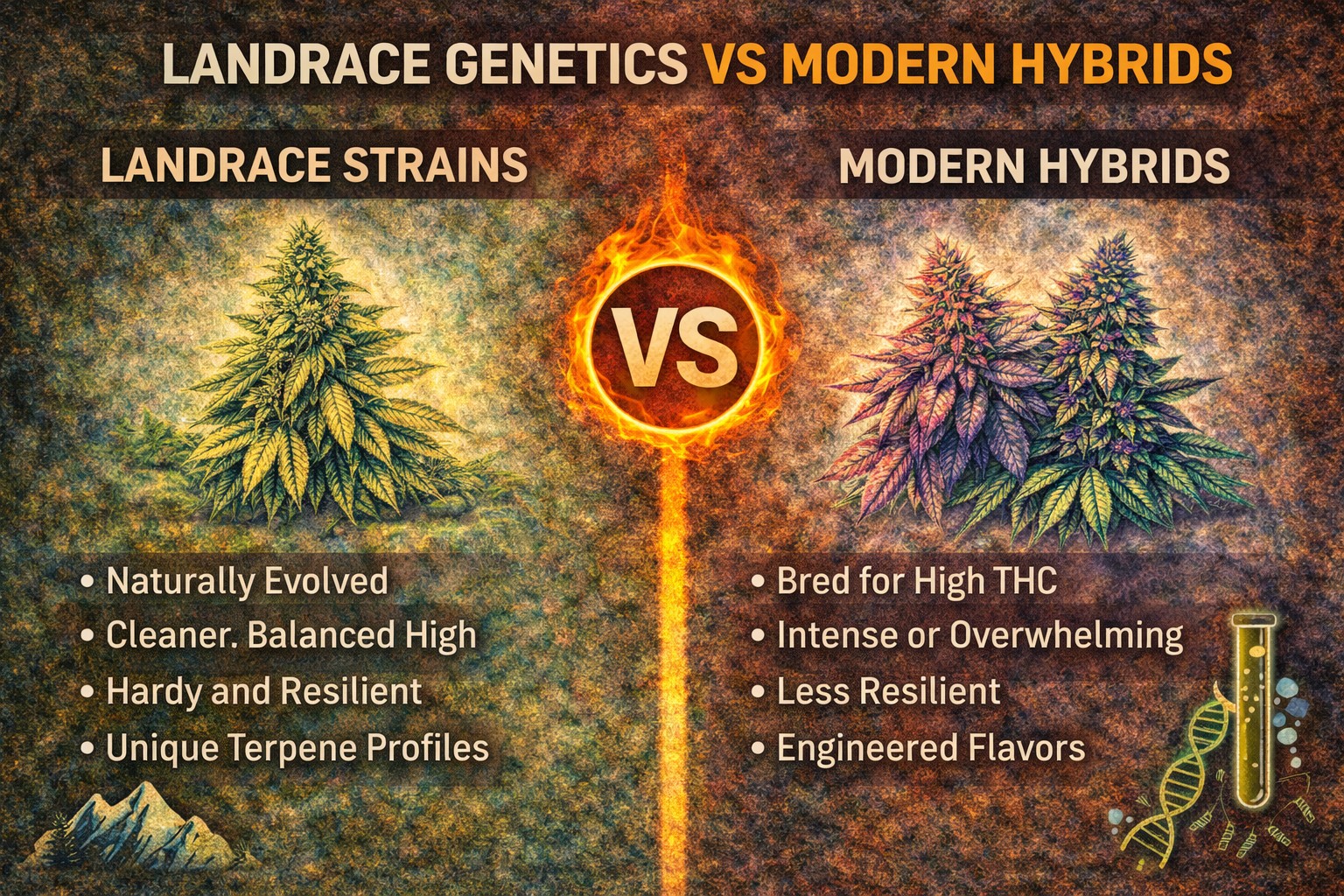
Modern cannabis strains are often bred for high THC levels, intense flavors, and heavy yields. Landrace strains, on the other hand, were shaped by nature, not market demand.
Because of this, landraces often produce effects that many users describe as:
- More balanced
- More predictable
- Less overwhelming
- Clearer in mental and physical effects
They also tend to be hardier plants, built to survive harsh or unique environments. This natural resilience is one of the reasons breeders still value landrace genetics today — they carry traits like mold resistance, drought tolerance, and structural strength.
Why Landrace Strains Are Disappearing
Unfortunately, many original landrace strains are becoming harder to find in their pure form.
As cannabis cultivation spreads globally, hybrid seeds often make their way into traditional growing regions. Over time, cross-pollination can dilute or completely replace native genetics. Commercial farming practices and changing agricultural priorities also threaten the survival of these original plants.
Climate change and environmental shifts add another layer of risk. When a plant has evolved for centuries in a specific climate, sudden changes can disrupt that balance.
Because of these pressures, preservation efforts by breeders and researchers are becoming more important than ever.
Conclusion
Landrace cannabis strains are not just the building blocks of today’s diverse cannabis varieties; they are a link to the plant’s ancient past and a key to its future potential. As we continue to explore and understand these strains, we unlock new possibilities for cultivation, medicine, and cultural appreciation. In preserving landrace strains, we preserve the essence of cannabis itself, ensuring that its rich history and genetic diversity are not lost but celebrated and carried forward.
List Of Landrace Strains
- Thai – Sativa from Thailand.
- Panama Red – Sativa traced to a small panamanian island.
- Hindu Kush – Indica growing in the Kush Mountain range.
- Afghani – Indica growing in the Afghan area.
- Durban Poison – Sativa traced back to Durban area of South Africa.
- Punto Rojo – Sativa that can be found growing in Columbia.
- Acapulco Gold – Sativa coming from the Mexico region.
- Lamb’s Bread – Sativa that originated in Jamaica.
- Malawi – Sativa originating from Malawi, Africa.
- Luang Prabang – Sativa originating in northern Laos.
- Delta Zonker – Sativa originating in Vietnam.
- Altai – Sativa originating in Southern Russia.
Landrace Cannabis FAQ
What is a landrace cannabis strain?
A landrace strain is a cannabis variety that developed naturally in a specific geographic region without modern crossbreeding.
Are landrace strains stronger than hybrids?
Not necessarily. Many landraces have moderate THC levels but offer unique, balanced effects.
Do landrace strains still exist today?
Yes, but pure examples are becoming rarer due to hybridization and environmental changes.
Why are landrace strains important to breeders?
They provide stable genetics and natural traits like resilience, terpene diversity, and balanced cannabinoid profiles.
What’s the difference between a landrace and a hybrid?
Landraces evolved naturally in one region, while hybrids are intentionally bred from multiple strains.