
New DEA Chief Calls Medical Marijuana a “Joke” — Backlash Follows
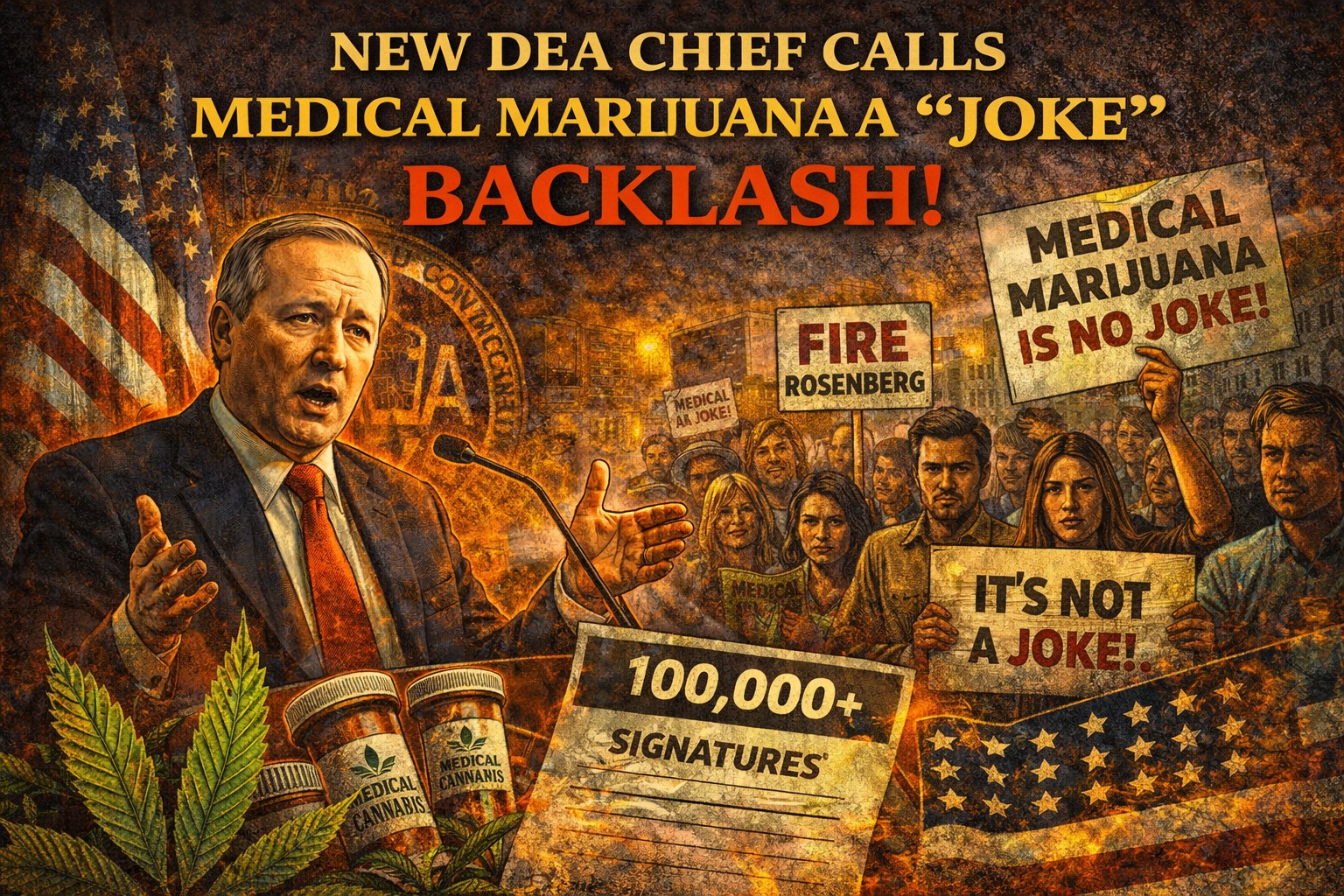
Supporters of medical cannabis across the United States reacted strongly after the head of the Drug Enforcement Administration (DEA) dismissed the medical use of marijuana as a “joke.”
Following the departure of former DEA administrator Michele Leonhart, many advocates had hoped federal attitudes toward cannabis might soften. However, comments from her successor, Chuck Rosenberg, suggested little change in policy direction at the federal level.
The Controversial Statement
Speaking to reporters, Rosenberg said:
“What really bothers me is the notion that marijuana is also medicinal — because it’s not… We can have an intellectually honest debate about whether we should legalize something that is bad and dangerous, but don’t call it medicine — that is a joke.”
The remarks quickly spread through cannabis advocacy circles and sparked significant backlash from patients, medical professionals, and reform organizations.
Public Response and Petition
In the days following the statement, more than 100,000 people signed a petition calling for Rosenberg’s removal. The petition was launched by Marijuana Majority, a cannabis policy advocacy group.
In a public response, the group’s chairman shared a personal story about a family member using medical cannabis to manage severe pain related to multiple sclerosis, emphasizing that for many patients, the issue is deeply personal rather than political.
The Ongoing Debate Over Medical Cannabis
Rosenberg’s comments highlight a long-standing divide between federal drug enforcement policy and evolving public and scientific perspectives on cannabis.
Over the past two decades:
- Many U.S. states have legalized medical marijuana programs
- Patients have reported benefits for conditions such as chronic pain, nausea, and certain neurological disorders
- Research into cannabinoids has expanded, though federal classification continues to restrict large-scale studies
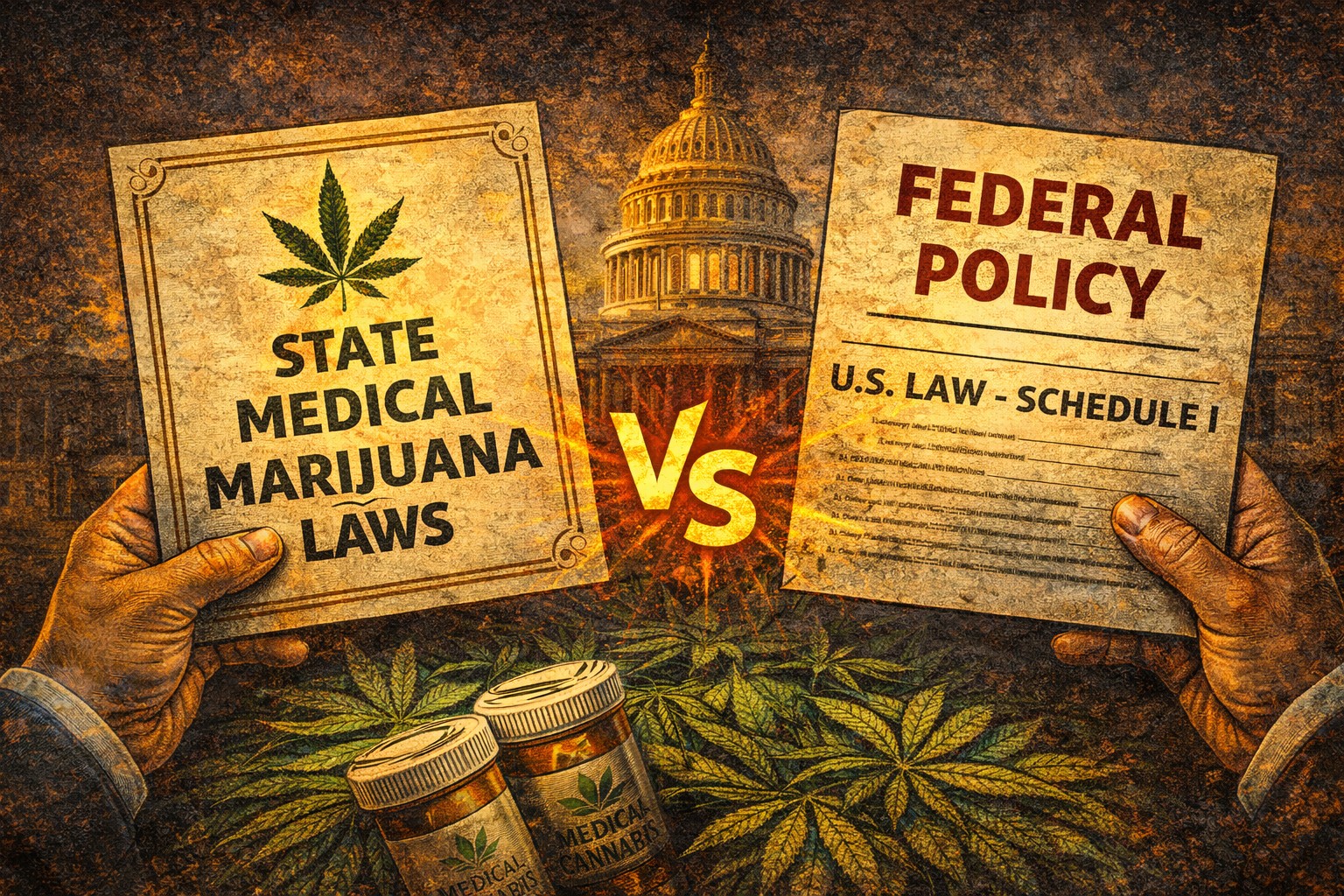
At the same time, federal law still classifies cannabis as a Schedule I substance, meaning it is officially considered to have “no accepted medical use” at the national level — a designation that many researchers and physicians dispute.
Cannabis vs Opioids: A Broader Health Discussion
The controversy also resurfaced a wider conversation about pain management in the U.S., especially as opioid-related deaths have remained a serious public health crisis.
Some researchers and policy advocates argue that access to medical cannabis could play a role in reducing reliance on opioid painkillers, though the relationship between cannabis policy and opioid use remains an area of ongoing study.
Federal Policy vs State Laws
One of the central tensions in U.S. cannabis policy is the gap between federal enforcement agencies and state-level reforms. While many states now allow medical cannabis, federal authorities still maintain the power to enforce national drug laws.
This creates uncertainty for:
- Patients
- Healthcare providers
- Researchers
- Businesses operating legally under state law
Rosenberg’s remarks reinforced concerns among advocates that federal policy may continue to lag behind public opinion and state legislation.
Why the Issue Matters
For supporters of medical cannabis, the debate is not just about policy — it’s about access to treatment options and recognition of patient experiences.
For federal officials, the issue remains tied to broader questions of public health, regulation, and scientific standards.
As more states expand cannabis access and research continues, pressure is likely to grow for federal agencies to reassess their position.